The current landscape
In recent years, global demand for critical minerals has risen rapidly. Cobalt has become a key resource in the energy and digital transitions: it is essential for batteries, electric mobility, and advanced technologies. The Democratic Republic of the Congo lies at the heart of this global race, accounting for more than 70–75% of the world’s cobalt production. This makes it a vital source of a strategic raw material used in batteries, advanced electronics, and electric vehicles.
The Country’s role has made it a crucial factor in the rivalry between the United States and China, both of which are seeking to secure direct access to critical mineral supply chains while reducing their dependence on networks controlled by the other. What is happening in the Congo is far from abstract: it is the local, physical manifestation of a global struggle to control the resources that power today’s economies and technologies.
Our investigation
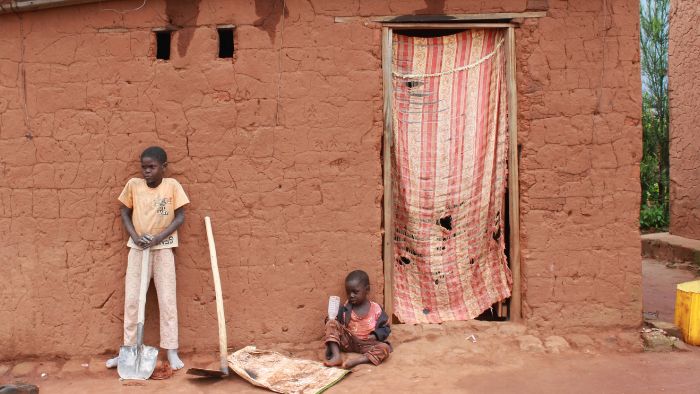
Between 2023 and 2025, we conducted field research among our students’ families to gain a deeper understanding of the conditions in which they live. The findings reveal a reality that remains largely invisible:
- 70% of our students live within mining concessions;
- 89% of their families do not hold legally recognized property titles;
- more than half were unaware that they lived on land granted to mining companies.
As the boundaries of mining concessions expand, the security of people’s homes becomes increasingly uncertain, placing the stability of entire communities at risk.
Why this concerns us all
Kolwezi is now a strategic hub in global supply chains. The technologies driving the energy transition – from lithium-ion batteries to digital infrastructure – also depend on resources extracted here. This means that what happens locally cannot be viewed in isolation: it is part of a global geopolitical competition for control over strategic resources.
Our work on the ground
To better understand this reality and support local communities, we have: documented the housing situation of our students’ families;
- created a verified archive of property-rights documentation;
- helped more than 60 families obtain legal property certificates;
- provided rights-awareness training to approximately 5,000 people.
The report we are presenting is not a rhetorical account. It is an analysis grounded in primary data, legal verification, firsthand testimony, and a deep understanding of how geopolitical competition translates into tangible consequences for people’s lives at the local level.
In a world where:
- global demand for cobalt continues to rise;
- global powers are seeking greater autonomy across their supply chains;
- mining companies are competing for control over strategic territories;
we set out to answer a fundamental question: What is the true cost of progress and who pays the price? By downloading the report, you will gain insight not only into where this global competition is unfolding, but also into the people who bear its consequences every day.